Blog
How Many Hours Is ‘Too Many’ on a Used Outboard Motor?

For most Australian buyers, the right question is not only “how many hours?” It is “what work has those hours done, and how was the boat and engine looked after?”
Is There a Number Where a Used Outboard Becomes Risky?
Hours are useful, but they are only one part of the story. Engine hours show how long the motor has run. They do not show whether it was serviced every 100 hours, flushed after saltwater use, stored upright, or operated gently at the correct temperature.
A modern four-stroke outboard with 1,500 engine hours is not automatically worn out. It may have spent years pushing a boat at sensible cruising speed, with regular oil, filter, impeller and gear-oil changes. That service history gives the engine a much better chance of being reliable.
On the other hand, a motor with 400 hours can have serious problems. Short trips, long periods idling, overheating, dirty fuel and poor storage can cause more trouble than steady operating hours. Saltwater corrosion can also damage an engine that looks tidy from a distance.
Practical answer: start paying closer attention above about 1,000 hours on a four-stroke and above about 700 hours on an older two-stroke. These are inspection points, not automatic rejection numbers.
The same rule applies when comparing a used boat and its engine. A seller who can show service invoices, compression results and sensible storage habits deserves more confidence than one who only points to a low number on the hour meter.
Useful Hour Benchmarks for 2-Stroke and 4-Stroke Motors
Buyers still need figures to compare engines. The numbers below are useful working benchmarks for a regularly serviced outboard motor, not promises from a manufacturer.
| Engine type | Lower-hour range | Higher-hour range | What to check |
| Modern four-stroke | Under 500 hours | 1,000 to 2,000 hours | Compression, service history, corrosion and cooling system |
| Older four-stroke | Under 400 hours | 800 to 1,500 hours | Age-related rubber, wiring, fuel system and parts availability |
| Two-stroke | Under 300 hours | 600 to 1,000 hours | Compression, oil injection, carburettors, exhaust and corrosion |
How Many Hours Is Too Many on a Used Outboard Motor by Design?
A well-maintained four-stroke can often give useful service beyond 2,000 hours, particularly when it has been flushed, serviced and stored properly. At that point, the value depends heavily on condition and the likely cost of age-related repairs.
A two-stroke has fewer moving parts in some areas, but older examples can need more attention to carburettors, fuel hoses, oil systems, exhaust components and electrical parts. A two-stroke with 700 hours is not automatically finished, although it deserves a proper mechanical check before purchase.
Ask how many hours per year the motor has done. A motor that ran 100 hours per year for ten years may have had regular use and regular servicing. A motor that ran 20 hours per year and then sat unused can have more fuel and seal problems despite showing fewer engine hours.
Hours Per Year Reveal How the Motor Was Used
Hours per year provide useful context. A recreational boat may record 50 to 100 hours per year. A fishing charter, work boat or busy family boat may record 150 to 300 hours per year. Neither pattern is automatically good or bad.
Regular operating hours can be healthy when the motor reaches working temperature and receives maintenance on schedule. A tradie’s boat may have many hours, but the owner may also have kept detailed service records because downtime costs money.
Very low hours per year can point to long storage periods. That raises questions about stale fuel, battery condition, dried seals, blocked injectors and neglected cooling passages. Ask how many hours the motor did each year, not just the total engine hours.
Signs of sensible use
The owner can explain where and how the boat was used.
- Steady annual hours with dated service records
- Freshwater flushing after saltwater trips
- Motor stored upright and protected
- Oil and filters changed at the correct interval
Signs that need questions
The hour number does not match the owner’s story.
- Almost no hours for several years
- Old fuel left in the system
- Long-term outdoor storage
- No explanation for missing service history
Why Age Matters as Much as Engine Hours
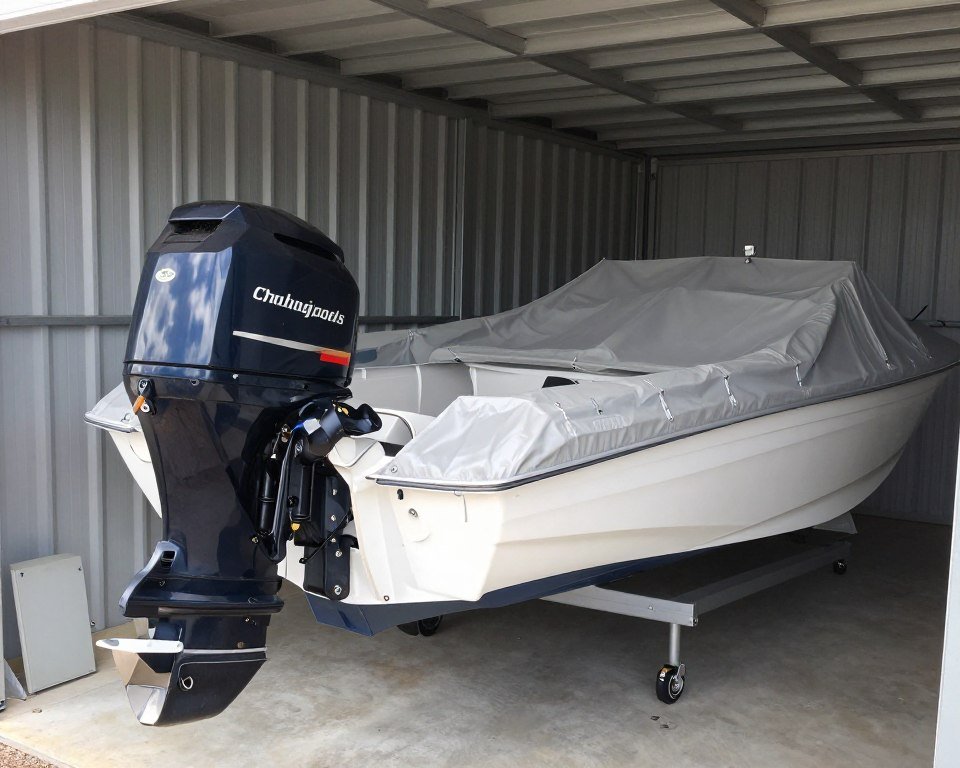
Hours measure use, while age measures exposure. An outboard can suffer from salt, heat, moisture and long storage even when it has barely run.
Rubber fuel lines, gaskets, seals and water-pump components become harder with age. Wiring insulation can crack. Connectors can corrode. Batteries fail, fuel tanks collect contamination and cooling passages can become restricted by salt deposits.
Age also affects parts support. A clean older motor may still be a good buy, but you should check whether common service parts, sensors and electrical components remain available. A cheap purchase becomes expensive if a small unavailable part leaves the boat off the water.
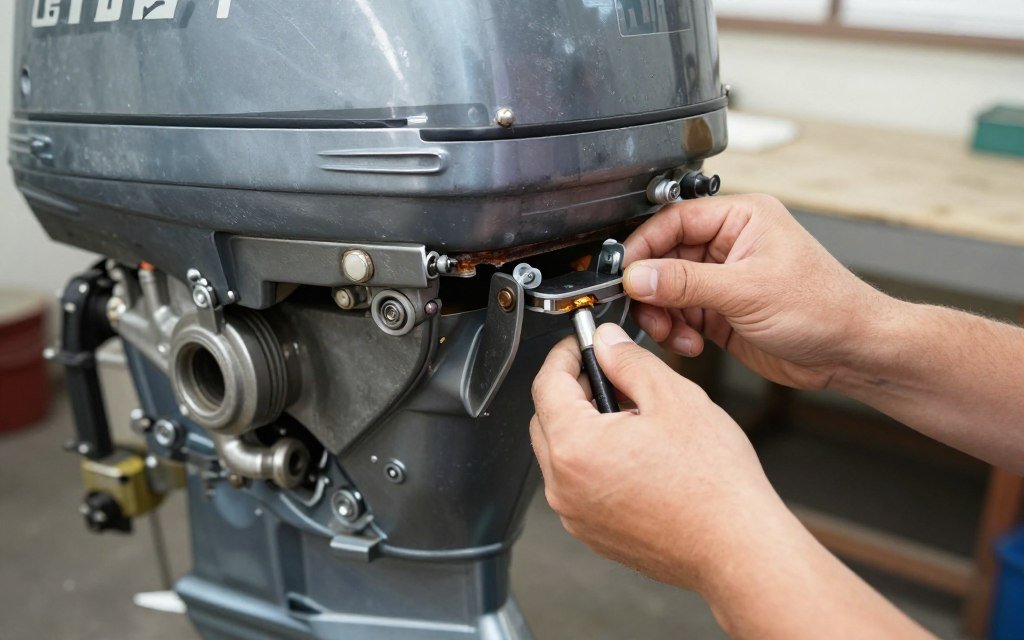
Look closely at the mounting bolts, steering tube, trim system, brackets and lower unit. These areas can show long-term exposure even when the cowling is polished. Corrosion around dissimilar metals is a warning sign that should not be ignored.
Remember: age and hours work together. A 12-year-old motor with 300 hours still has 12 years of seals, wiring and corrosion exposure.
Why Low Hours Can Be a Red Flag
Low hours sound attractive, but an unused motor is not automatically a healthy motor. Fuel systems dislike long periods of inactivity. Petrol becomes stale, injectors gum up and carburettor passages can block.
Seals can dry out when they are not exposed to fresh lubricant. Water-pump impellers can take a set. Cooling systems may still contain salt deposits from the last trip years earlier. Batteries and electrical connections can deteriorate while the boat sits under a cover.
Ask what “low hours” means in real use. Was the engine started monthly? Was it run long enough to warm up? Was the fuel drained or treated? Was the motor flushed after every saltwater trip?
A low-hours motor with unknown storage can need a full service before it is trusted. That cost should be included when comparing it with a higher-hours engine that has clear maintenance records.
Want a motor with its condition checked?
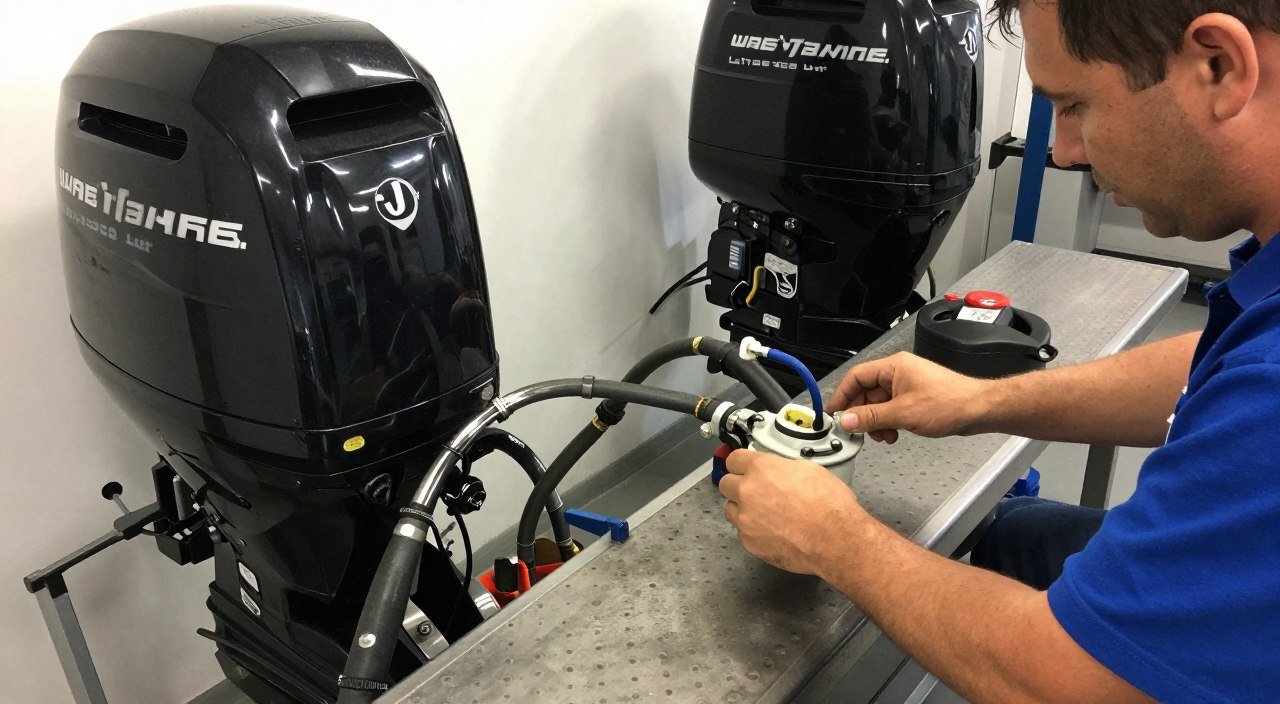
Outboard Engine Hub lists inspected used motors for Australian boat owners. Every motor is compression tested before sale and comes with a 90-day warranty.
What to Check Instead of Fixating on the Hour Meter
The hour meter is only one piece of evidence. A proper inspection should look at how the engine starts, runs, cools, shifts and responds under load.
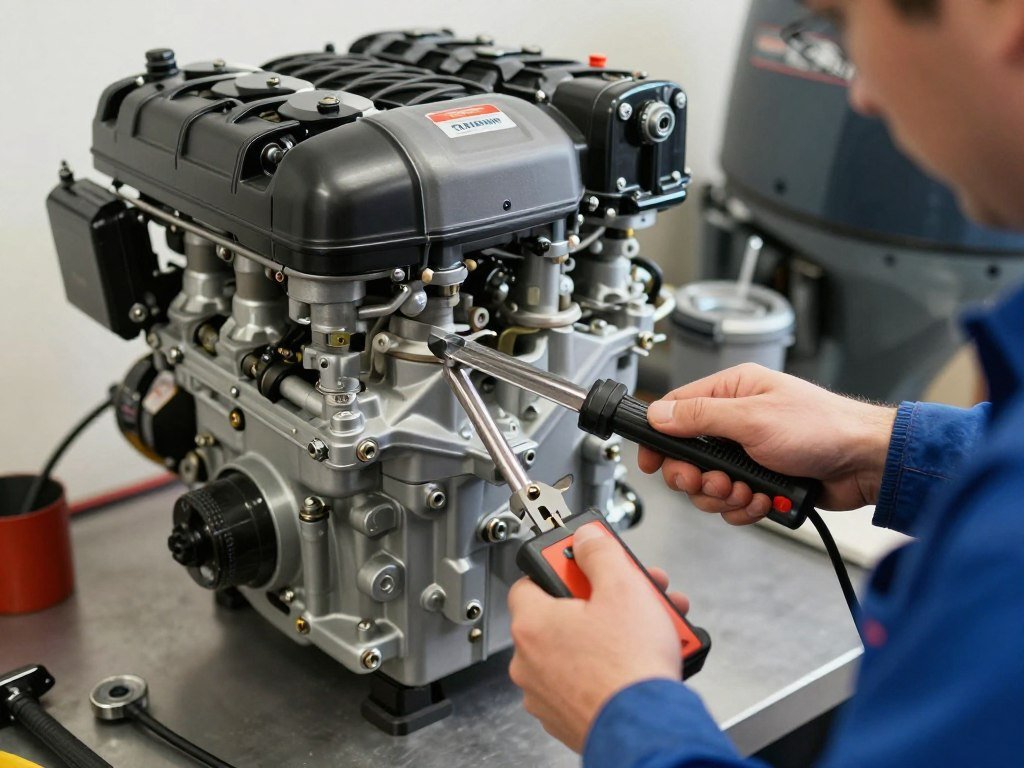
- Compression. Test every cylinder with the engine at the correct temperature. The readings should be reasonably even. A large difference between cylinders can point to worn rings, valves, piston damage or head-gasket trouble.
- Corrosion. Inspect the powerhead, brackets, anodes, bolts, steering tube, trim system and lower unit. Saltwater corrosion around electrical connections and cooling passages can be costly.
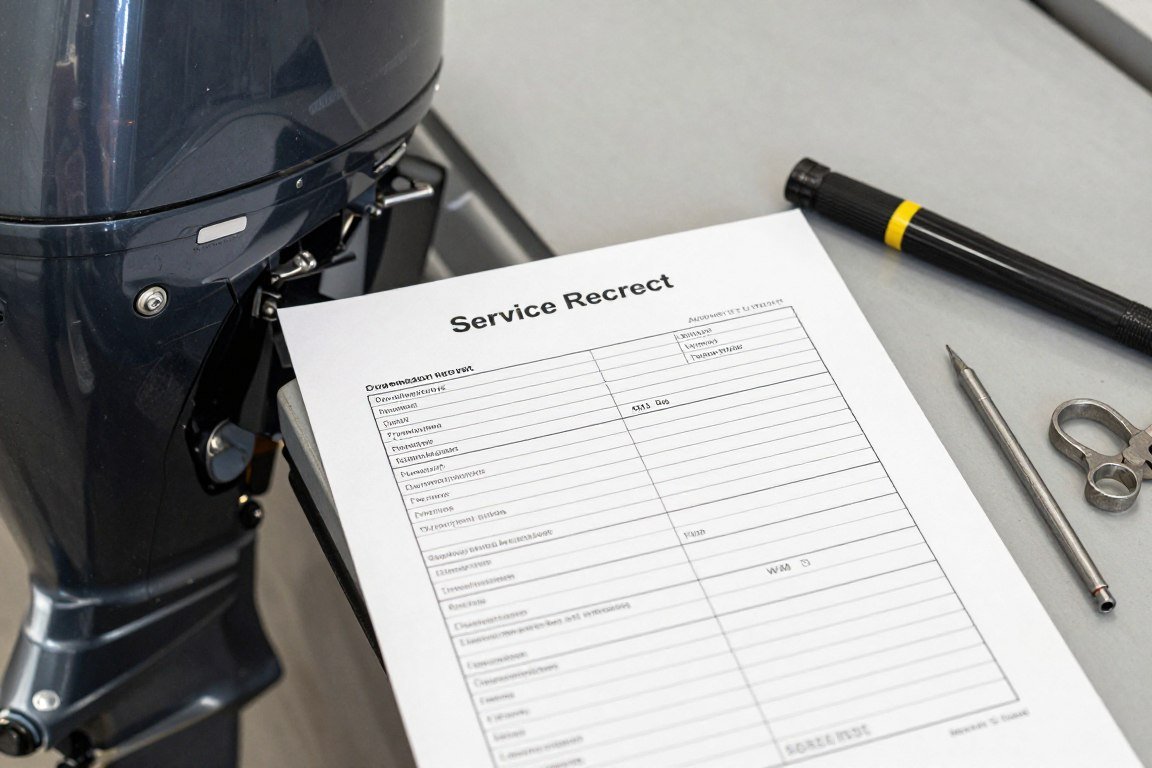
- Service records. Look for invoices rather than verbal promises. Records should show oil, filters, spark plugs, gear oil, impeller work and other scheduled maintenance.
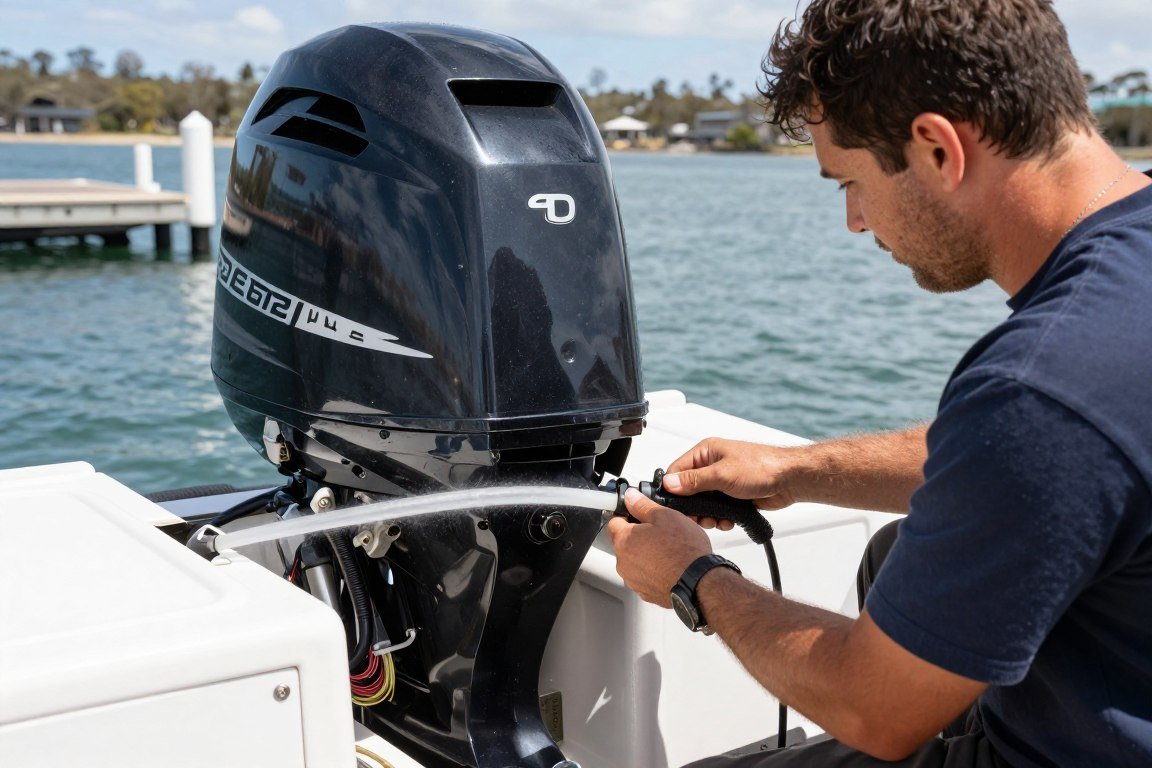
- Cooling water flow. The tell-tale should produce a strong, steady stream once the motor runs. A weak stream can mean a blocked passage, worn impeller or cooling system issue.
- Starting and idling. The motor should start without excessive cranking and settle into a stable idle. Hunting, stalling or hard starting needs investigation.
- Shifting and throttle response. Test forward and reverse engagement, acceleration and return to idle. Crunching, delay or slipping can point to gearcase or control problems.
- Leaks and noises. Check for fuel, oil and water leaks. Listen for knocks, rattles, grinding and unusual vibration while the engine is running.
- Independent inspection. If the purchase matters, pay for a marine mechanic to inspect the motor. This is cheaper than discovering a major fault after the sale.
For general safety guidance, review the Australian Maritime Safety Authority’s safety and navigation information for recreational boaters. A sound engine is only one part of a safe boat. Fuel, electrical systems, steering and emergency equipment also deserve attention.
How to Compare Two Used Outboard Motors
Suppose one motor has 450 hours and the other has 1,200 hours. Do not choose the 450-hour engine until you know how both motors were used and maintained.
The 1,200-hour engine may have complete annual service records, clean compression, good cooling flow and little corrosion. The 450-hour motor may have sat for years with stale fuel and no documented maintenance. In that example, the higher-hours engine may offer the lower ownership risk.
The stronger purchase
- Even compression across cylinders
- Clear service invoices
- Clean cooling water flow
- Minimal saltwater corrosion
- Starts, idles and shifts correctly
The riskier purchase
- Low hours with no storage explanation
- Uneven compression readings
- Blocked or weak tell-tale stream
- Corroded brackets and electrical parts
- Hard starting or unexplained noises
Allow for repair costs, not just the asking price. A motor that needs an impeller, service and fuel-system clean may be reasonable. A motor with low compression, heavy corrosion or a damaged gearcase should usually be rejected unless the discount covers a proper rebuild.
Also check that the engine suits the boat. Horsepower, shaft length, mounting height, steering controls and weight all matter. A reliable motor that is wrong for the hull is still the wrong purchase.
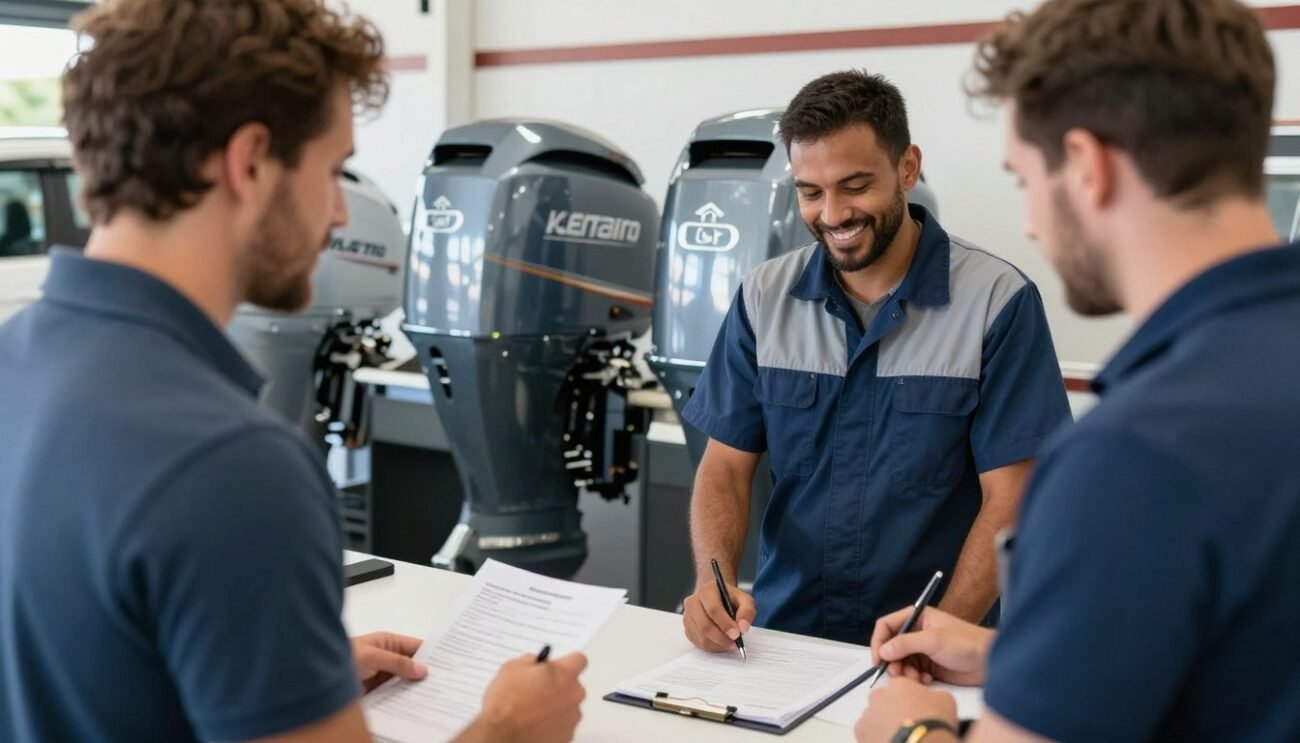
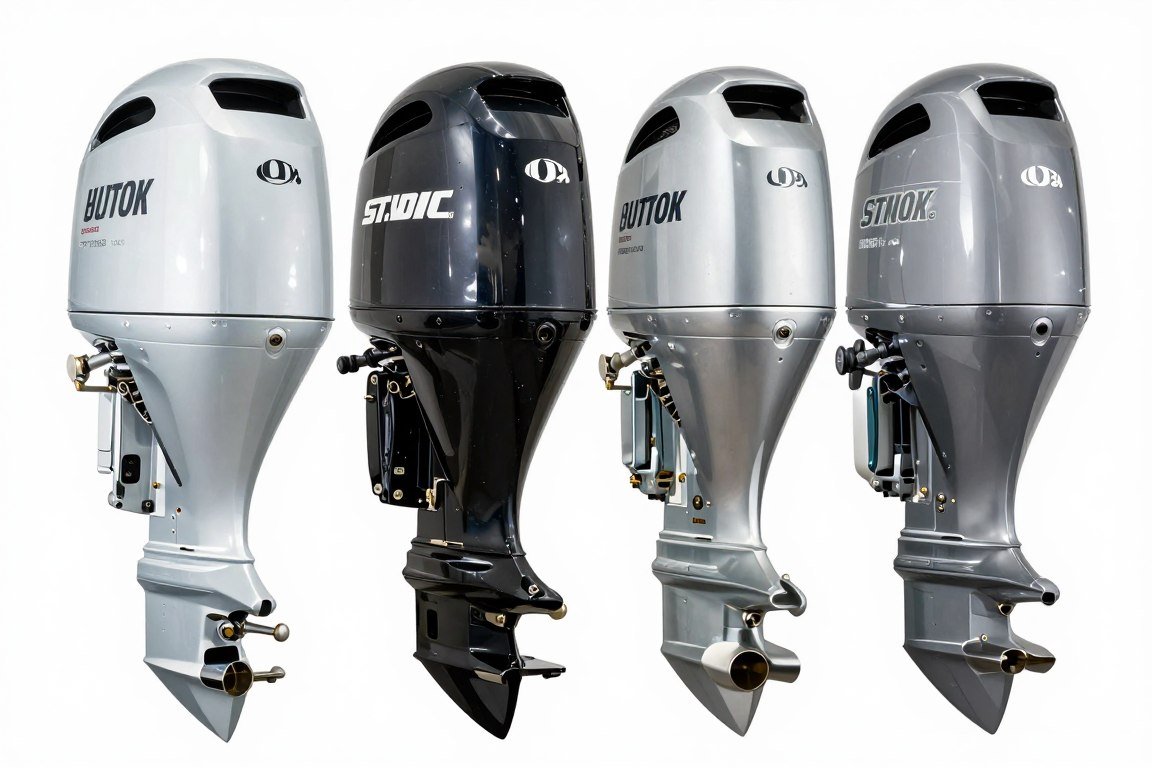
Honda, Yamaha, Suzuki, Mercury and Tohatsu Hour Advice
Brand matters less than condition, but buyers often compare the major manufacturers. Honda and Yamaha four-strokes are common on Australian boats and can deliver long service when maintained. Suzuki, Mercury and Tohatsu also have strong four-stroke options, with parts support and local servicing worth checking before purchase.
Do not assume one badge makes a high-hours engine safe. Check the exact model year, service requirements, parts availability and operating history. Two motors with the same brand and hours can have very different condition.
If you already know the brand, start with the relevant inspected stock. Outboard Engine Hub has Suzuki outboards, Mercury outboards and Tohatsu outboards available for buyers comparing used motors.
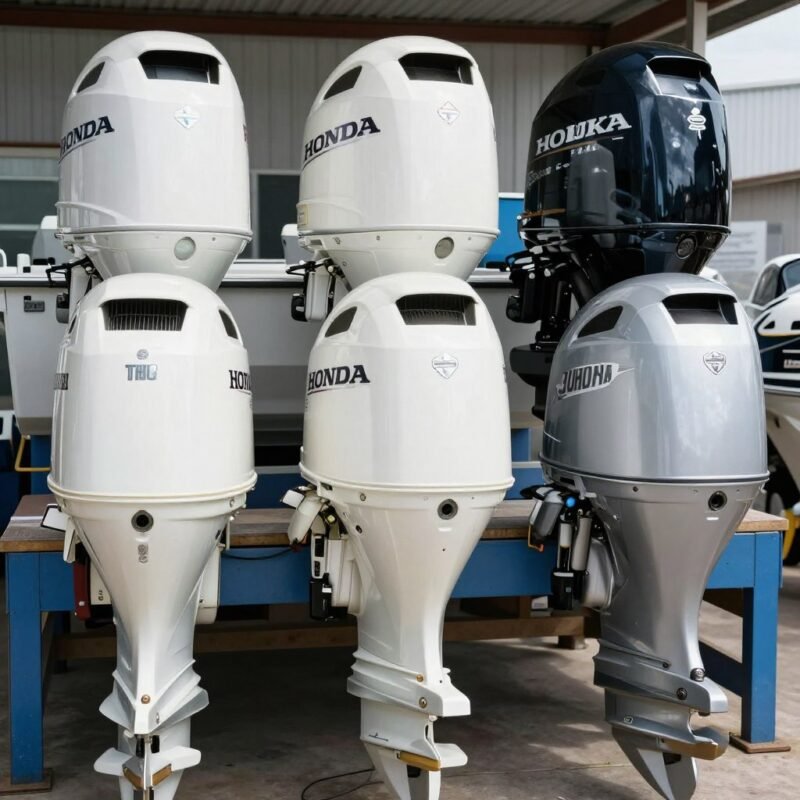
Compare inspected brands before you buy
Choose the brand that suits your boat, then compare compression results, age, hours, service evidence and warranty cover.
Browse Inspected Used Outboards With More Confidence
So, how many hours is too many on a used outboard motor? There is no automatic cut-off. Treat higher hours as a reason to inspect more closely, not as proof that the motor is finished. Treat low hours as a reason to ask about fuel, storage and servicing, not as proof that the motor is excellent.
Compare compression, corrosion, cooling flow, service records, age and real operating history. A well-maintained higher-hours engine can be the sensible buy when the low-hours alternative has an unknown past.
Outboard Engine Hub checks the details that matter before listing a motor. Every motor is compression tested and comes with a 90-day warranty, giving Australian boat owners a clearer starting point than an unverified private sale.
Find your next used outboard
Browse inspected motors by brand, or contact Outboard Engine Hub for help matching an engine to your boat, use and budget.