
Blog
Outboard Motor Maintenance Schedule: What Owners Should Be Doing Every Season

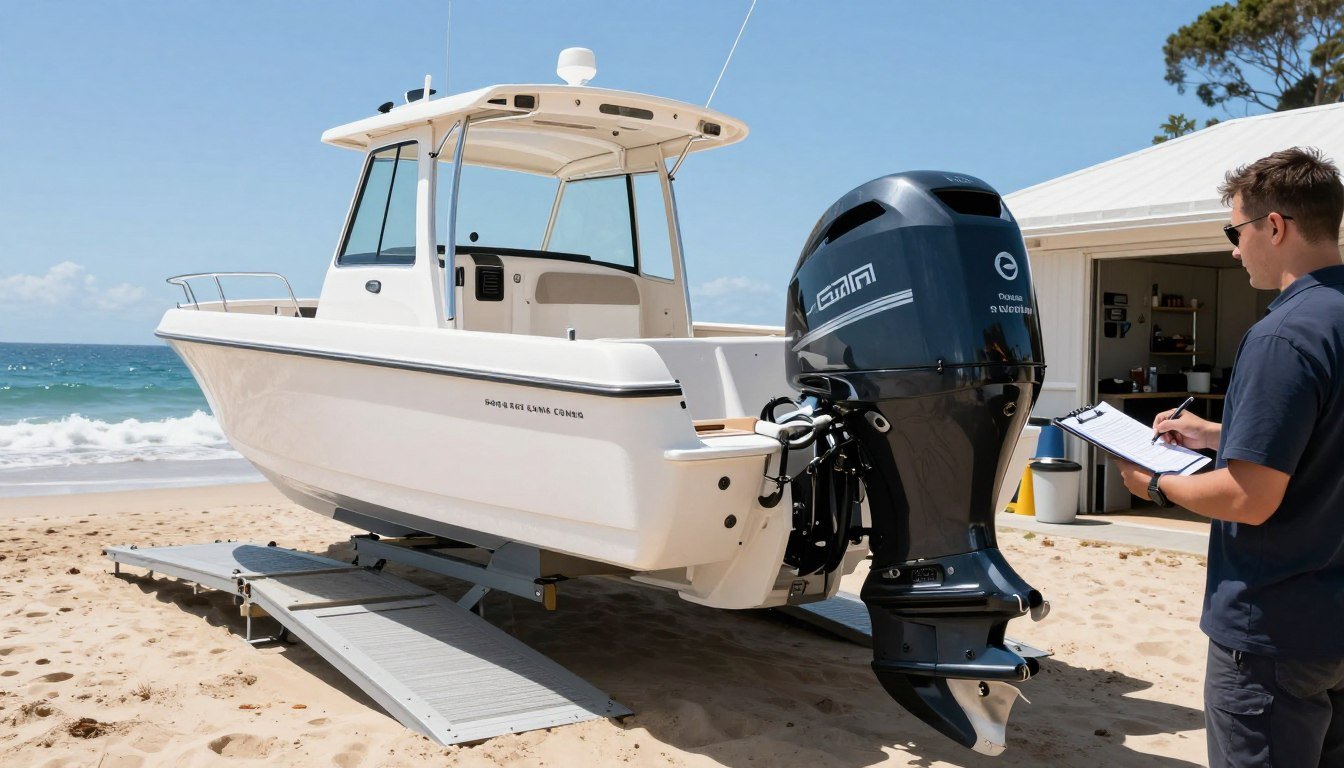
A neglected outboard can look fine at the ramp and still hide salt, water or fuel problems. Follow this outboard motor maintenance schedule to keep the engine reliable and protect its resale value.
The times below suit many recreational engines, but your service manual still has the final word. Severe saltwater use, long periods at idle, heavy loads and dusty storage can bring service forward.
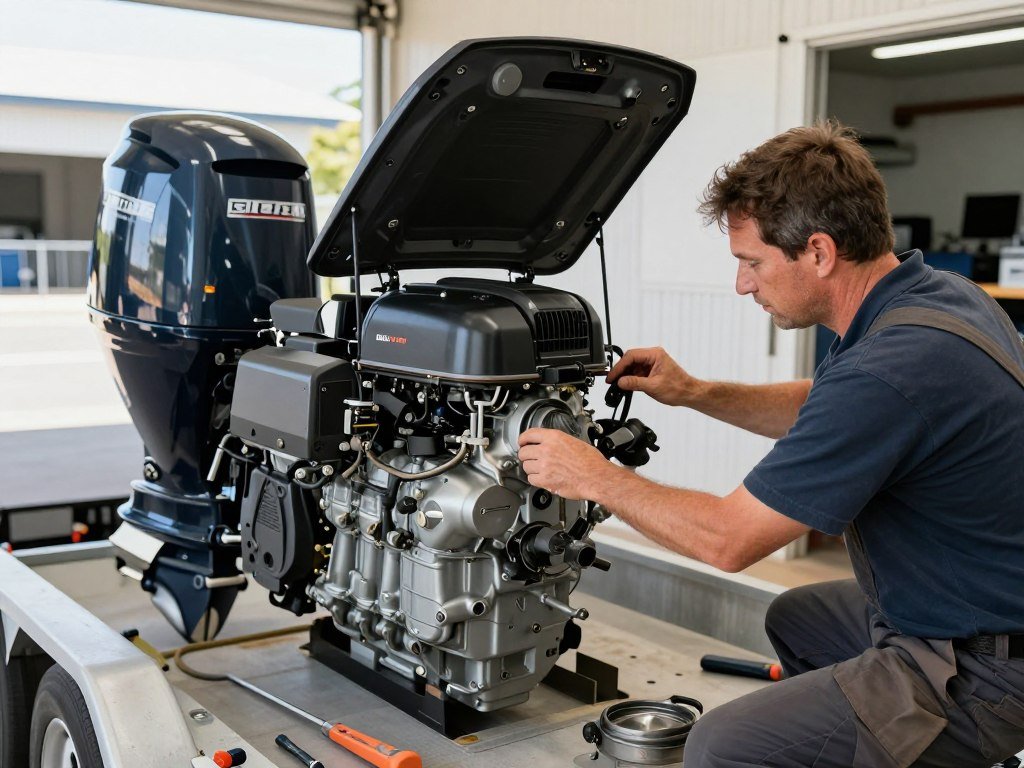
Outboard motor maintenance schedule at a glance
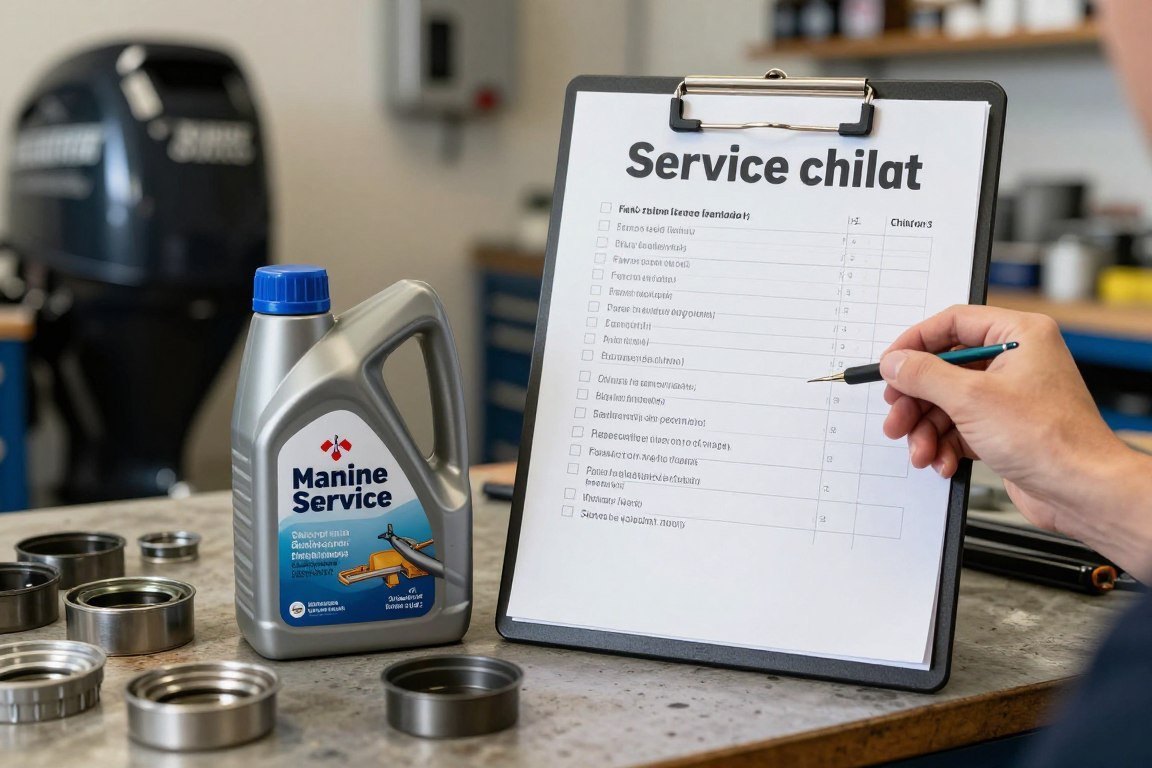
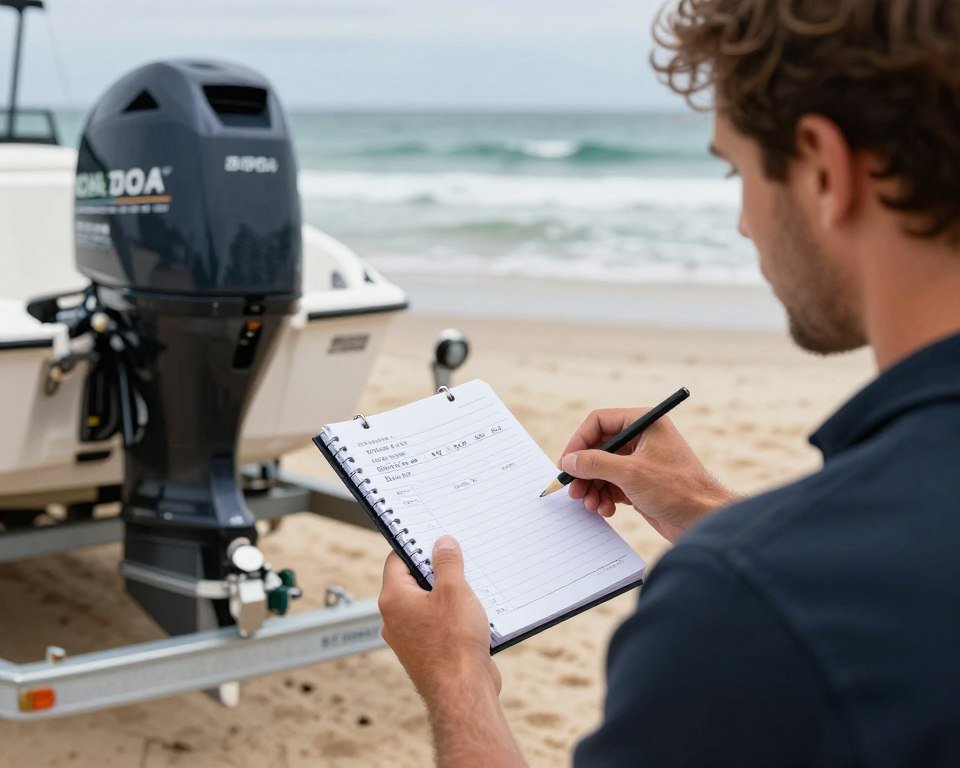
Small checks done often prevent larger repairs. Keep a notebook or phone record with the date, engine hours, oil grade, parts fitted and any faults found.
| Interval | Main work | Reason |
| After every trip | Flush with fresh water, rinse the housing and inspect the propeller. | Removes salt and catches line or debris. |
| Every month | Check the fuel system, battery terminals and anodes. | Finds cracks, poor charge and corrosion early. |
| Every season | Change 4-stroke engine oil, grease fittings and check the water pump. | Protects moving parts and cooling flow. |
| Every 100 hours or one year | Replace plugs and fuel filter, change lower unit oil and test compression. | Catches wear before it becomes a breakdown. |
After every trip and every month
After every trip
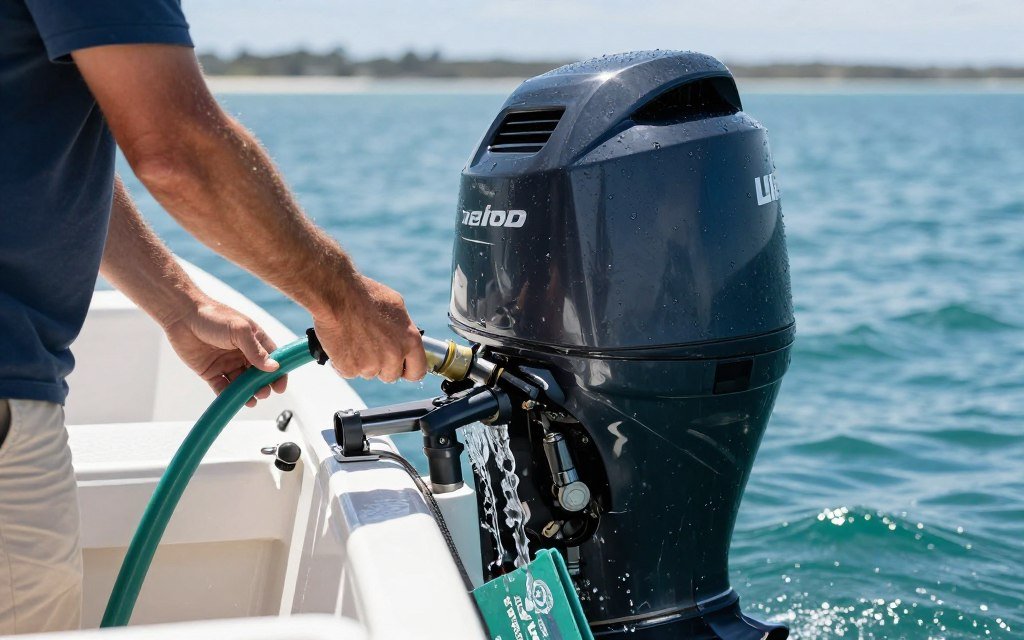
Flush the outboard with clean, fresh water after every use. This matters most after saltwater running, because salt remains inside the cooling system, water pump passages and thermostat housing when it dries.
Let the engine cool, connect the correct flushing attachment and follow the manufacturer’s procedure. Do not run an engine without proper water supply. A flush is not a substitute for a cooling system inspection, but it removes a large amount of salt and sediment.
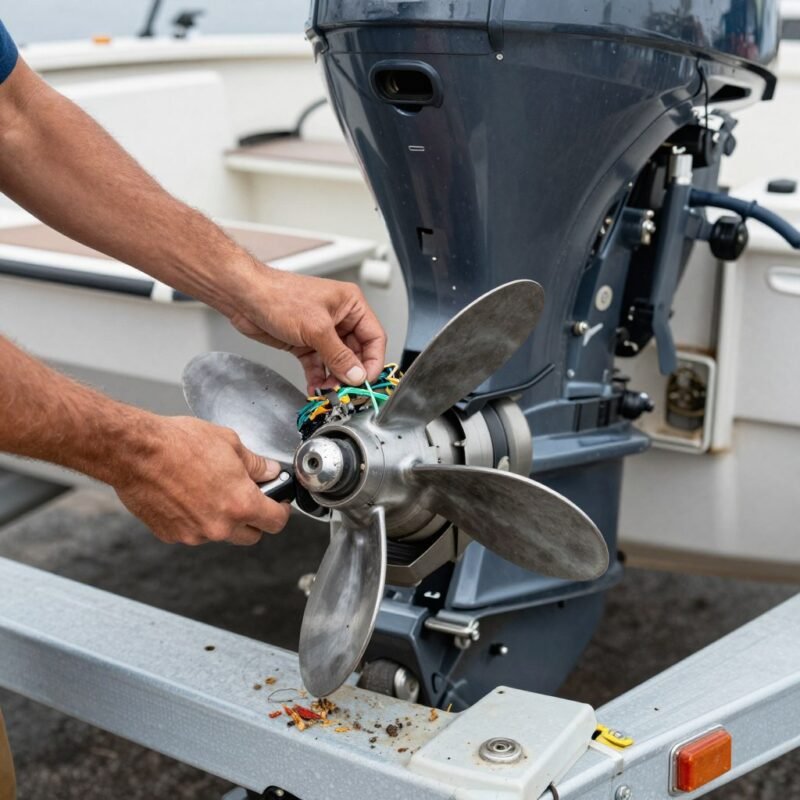
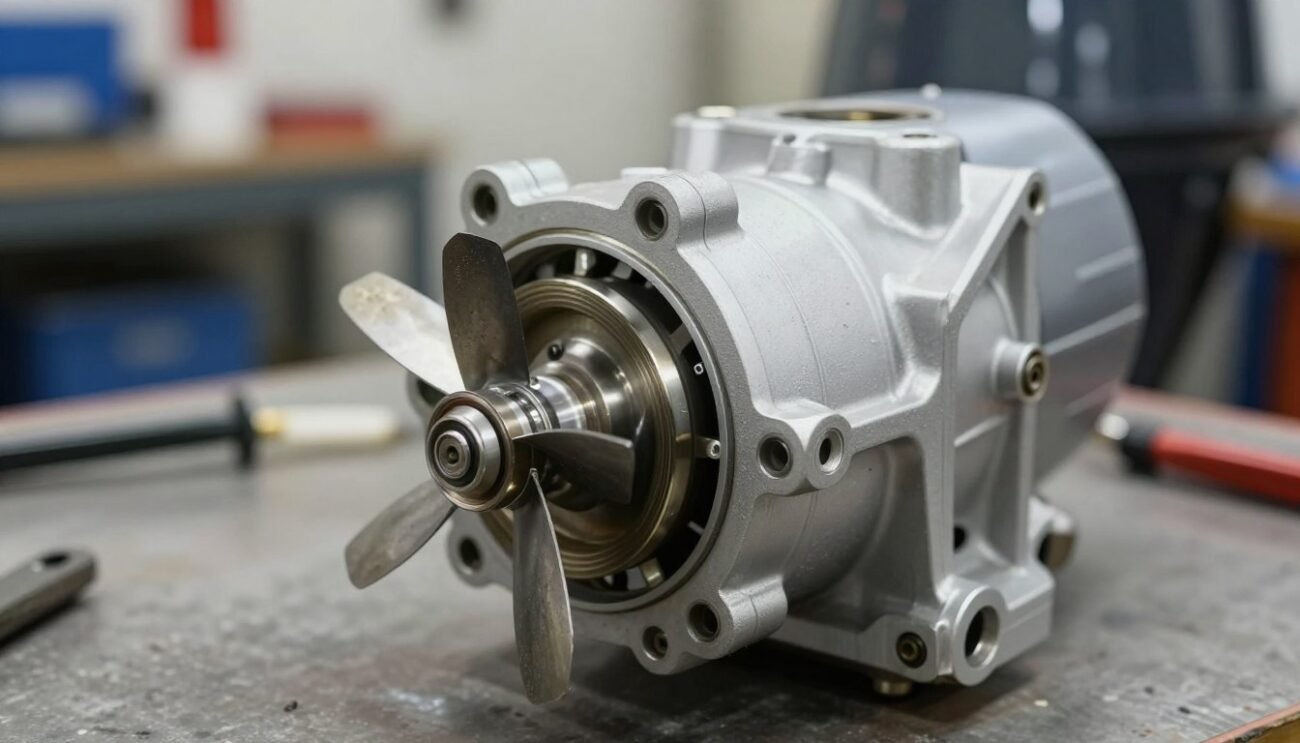
Rinse the outside of the engine, bracket and steering parts. Lift the cowling when the engine is dry and look for fuel, oil or water leaks. Check the propeller for fishing line, rope, weed and impact damage. Line around the shaft can damage seals and allow water into the lower unit.
Every month
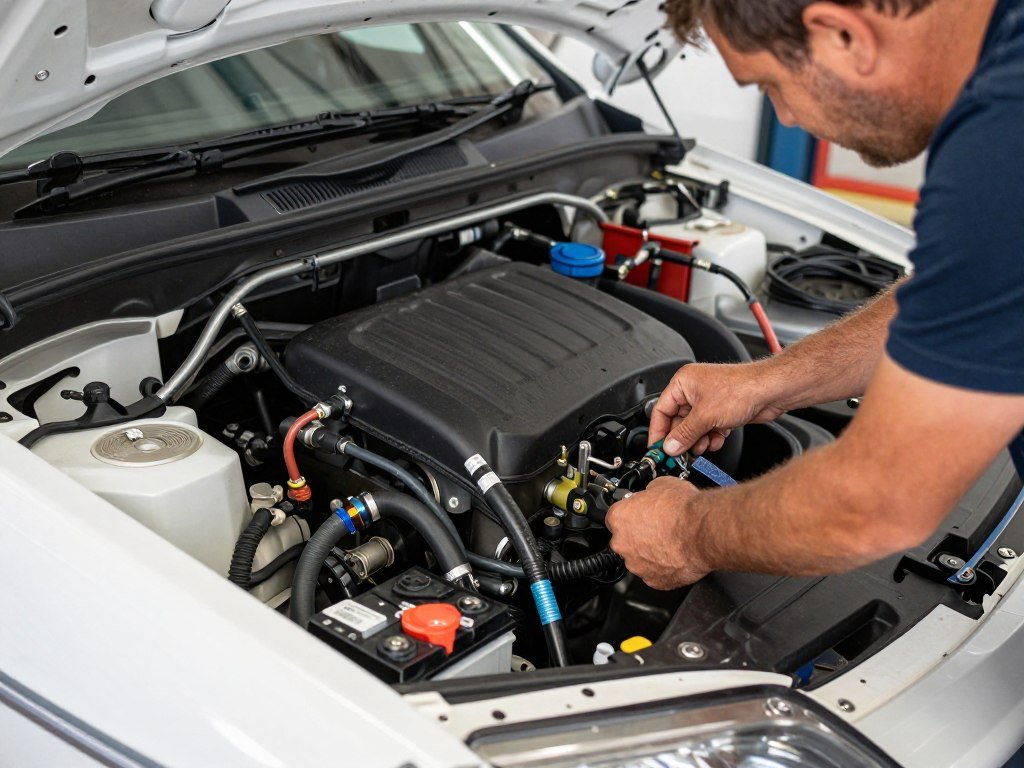
Inspect the fuel system from the tank to the engine. Look for cracked fuel lines, soft sections, loose clamps and a primer bulb that no longer firms up. UV and heat can age rubber faster than many owners expect.
Check battery terminals for white or green corrosion. Clean them safely, tighten the connections and confirm the battery can hold charge. A weak battery can cause hard starting and may damage sensitive electrical parts.
Visually check the anodes. They should wear gradually. If an anode is heavily wasted, loose or coated in paint, it cannot protect the engine properly. Never paint the working surface of an anode.
Seasonal outboard service every 3 months or 50-100 hours
At roughly three months or 50 to 100 hours, service the engine even if it still starts easily. For a 4-stroke, replace engine oil and the engine oil filter if the model uses one. Use the correct oil level and grade listed in the manual. Too much oil can be as harmful as too little.
Grease the specified fittings, including steering and swivel points where applicable. Use marine grease and wipe away excess so it does not collect grit. Inspect the propeller shaft before greasing, especially if the boat works in weed or shallow water.
Check the water pump and impeller when the service interval says they are due. The impeller is a wearing part. A damaged impeller can reduce water flow, raise engine temperature and trigger an overheat warning. Inspect the cooling system, thermostat and tell-tale stream rather than assuming a strong stream proves everything is perfect.
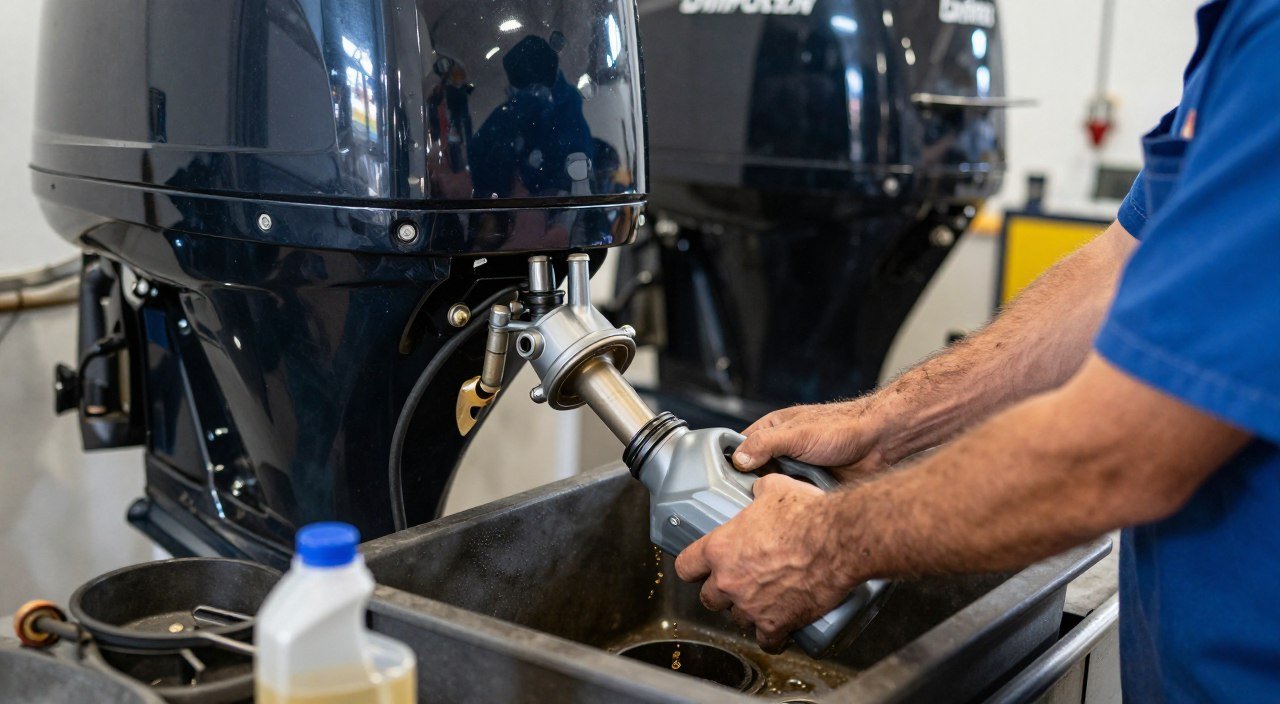
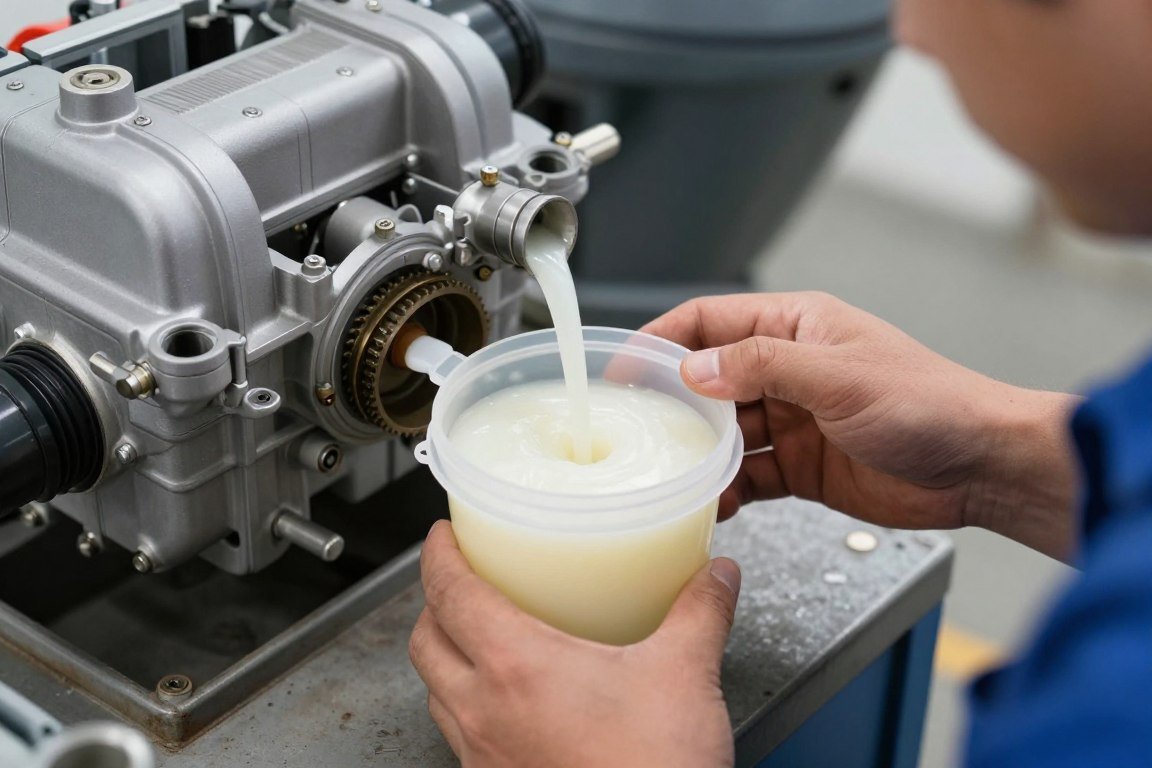
Remove a small sample of lower unit gear oil and inspect its condition. Clean oil is usually consistent in colour. Milky oil is a warning sign that water has entered the lower unit. Find the cause before running the engine again, because water contamination can damage gears and bearings.
Some engines also have a timing belt inspection or replacement interval. Add it to the service record. A belt that fails can cause major engine damage, so do not ignore the manufacturer’s timing belt limit.
Annual or every 100 hours, whichever comes first
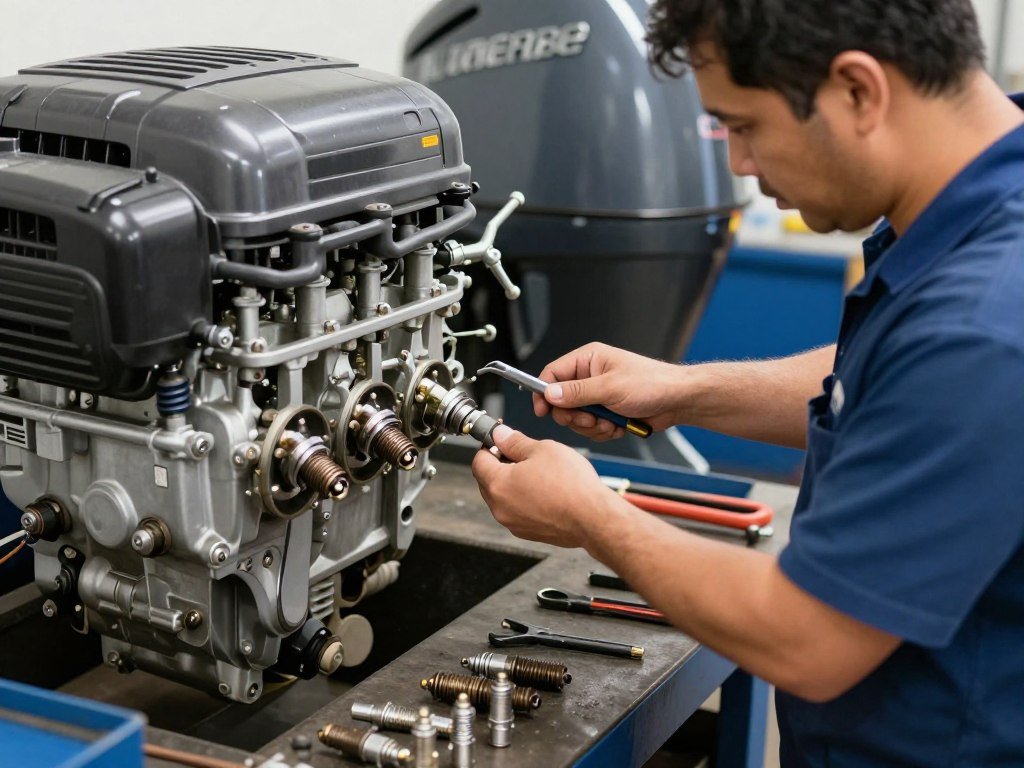
The 100-hour annual maintenance visit is the point for a more complete inspection. Replace the spark plugs with the correct type and gap. Worn spark plugs can cause hard starting, poor idle, misfire and higher fuel use.
Replace the fuel filter and inspect the full fuel system for contamination. If the filter contains water or dirt, check the tank and fuel lines before fitting a new part. Replace fuel hoses that are brittle, swollen or cracked.
Change the lower unit gear oil completely. Inspect the drain and vent screw washers, then refill the lower unit with the specified gear lube. Check for leaks after the first outing.
Inspect every anode and replace one when it is worn past the manufacturer’s safe threshold. The exact limit varies, but a badly reduced anode is not worth saving. Check the mounting area too, because paint, scale or a poor connection can stop protection.
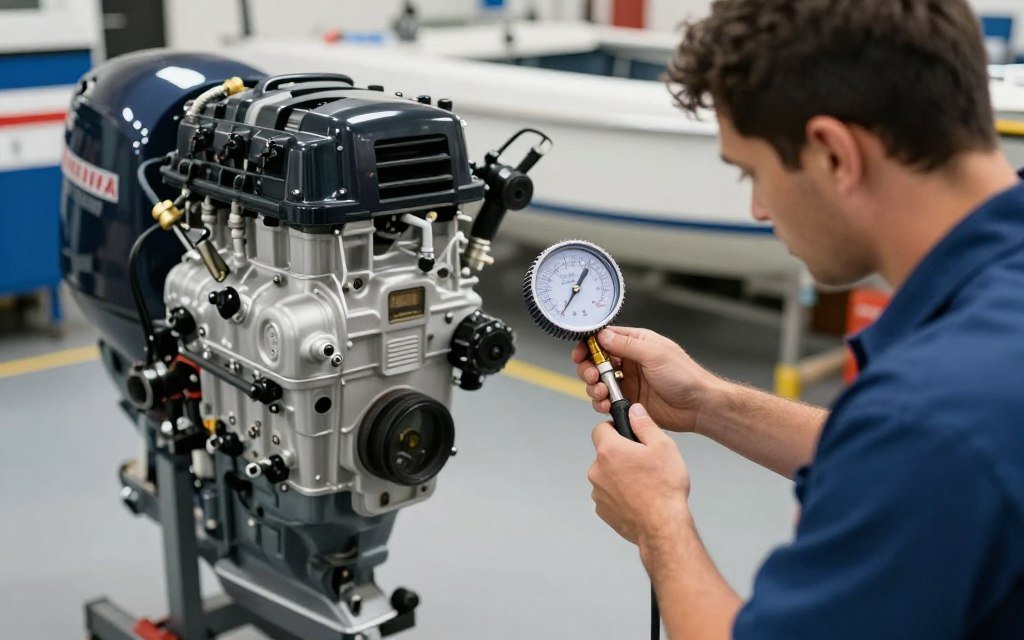
Carry out a general compression check to catch problems early. Uneven readings can point to valve, ring or cylinder issues. Record the results so a mechanic can compare them at the next inspection.
Depending on the engine, the annual list may also include a thermostat, timing belt, oil filter or water pump check. Follow the service manual for the exact part and interval. For boating safety information, review the NSW Government recreational boating guidance.
Australian conditions and off-season storage
Australian saltwater use creates a high corrosion risk. Flushing after every use matters more here than it does in regions where boats spend most of their time in freshwater. Salt can remain around fasteners, anodes, the cooling system and the lower unit.
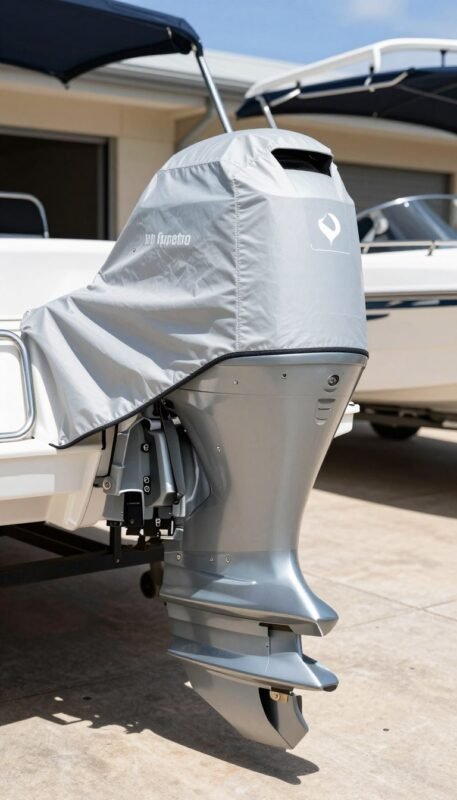
Strong UV and heat also age fuel lines, primer bulbs, wiring insulation and seals. Keep the cowling fitted, park the boat out of direct sun when possible and replace rubber parts at the first sign of cracking.
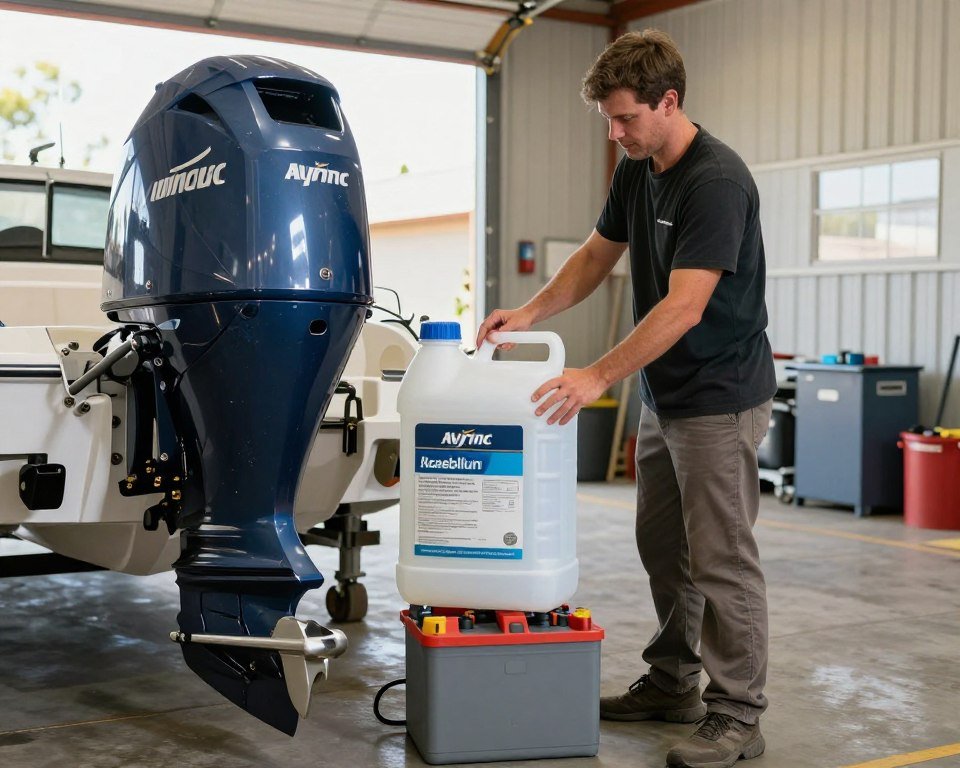
If the boat sits unused for months, add the correct fuel stabiliser to fresh fuel and run it through the fuel system as directed. For a 2-stroke, use fogging oil according to the manufacturer’s instructions. Do not guess with fuel or oil ratios.
Disconnect the battery, clean its terminals and store it in a dry, secure place if appropriate for the battery type. Before storage, make sure the lower unit oil is fresh. Old oil may contain water, and that water can cause internal corrosion while the boat sits.
Good outboard maintenance protects resale value
A service record gives a buyer something better than a verbal promise. Dates, engine hours, oil changes, spark plugs, impeller work, anodes and compression results show how the outboard has been treated.
Keep receipts and photograph major work. A clean engine with intact labels, sound fuel lines and a tidy lower unit is easier to inspect and easier to sell. Maintenance also helps you spot a fault before it becomes an expensive repair.
Planning an engine upgrade?
Compare well-maintained used options by brand, size and intended use. Outboard Engine Hub buys and sells used outboards for Australian boat owners.
Owners looking for other proven brands can also inspect Mercury outboards and Tohatsu outboards. Match the replacement to the boat’s transom rating, shaft length, controls and actual load, not just the advertised horsepower.
Owners who keep up with this maintenance schedule protect their outboard’s reliability and resale value. If you are considering an upgrade down the track, Outboard Engine Hub buys and sells well-maintained used outboards. For help with your current engine or a replacement, contact Outboard Engine Hub.
Keep your next move simple
Send through the engine brand, model, shaft length, hours and service history. The more detail you provide, the easier it is to discuss a suitable used outboard.